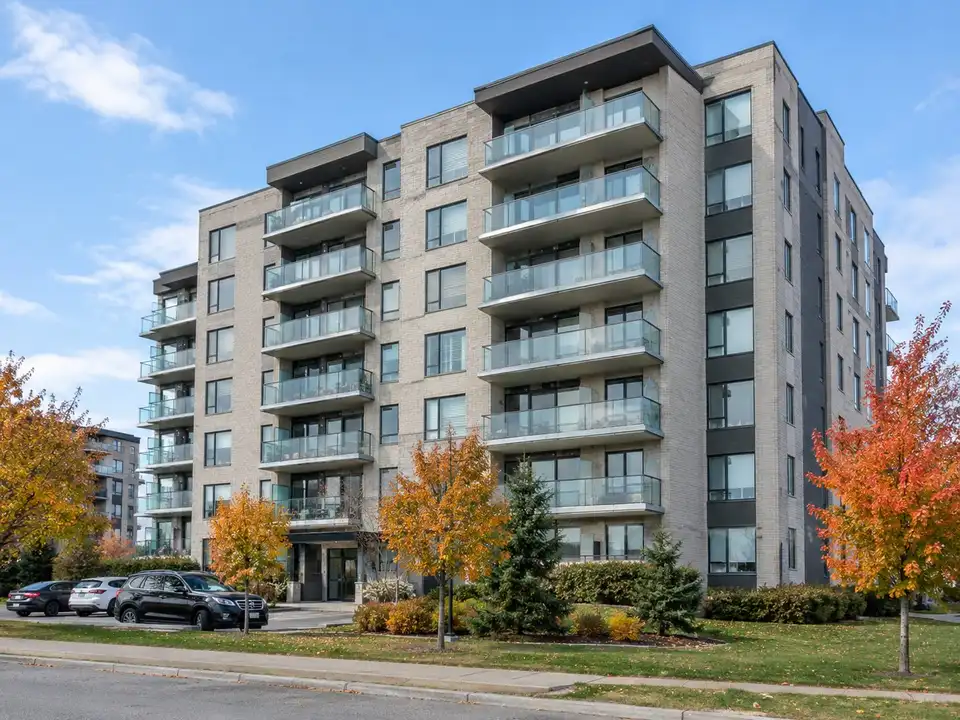
ReverseMortgageOshawa.ca is an Oshawa website that explains reverse mortgages to homeowners aged 55 and older. This page covers a reverse mortgage on a condo in Oshawa, whether you live in an apartment-style unit or a condo townhouse. If you’ve been looking at condos in Oshawa or seniors apartments as your next move, it also shows what your current unit could provide if you stay.
In the 2021 census, 4,770 Oshawa households, or 7.2%, lived in a condominium (Statistics Canada, 2021 Census).
What Oshawa condos were worth in September 2026
TRREB’s benchmark price describes a typical unit. The average price describes only the units that happened to sell that month (TRREB, September 2026).
| Oshawa, September 2026 | Benchmark | Change in a year | Sales | Average sale |
|---|---|---|---|---|
| Condo apartment | $409,000 | down 6.55% | 7 | $301,786 |
| Townhouse | $489,300 | down 9.44% | 12 condo townhouses | $486,108 |
The sales counts are very small. With 7 condo apartment sales in the month, one or two units can move the average a long way, which is why the average is well below the benchmark. The benchmark is the steadier guide to what a typical unit is worth. For more detail by community, see the Oshawa home prices guide and the September 2026 Oshawa market update.
How much you could get on an Oshawa condo
The most you could get depends on the age of the youngest owner. The table uses the two September 2026 benchmarks as examples. The figures are ceilings, not quotes.
| Youngest owner | Up to | Condo apartment at $409,000 | Townhouse at $489,300 |
|---|---|---|---|
| 65 | 50.55% | about $206,700 | about $247,300 |
| 70 | 52.85% | about $216,200 | about $258,600 |
| 75 | 57.75% | about $236,200 | about $282,600 |
| 78 and older | 60% | about $245,400 | about $293,600 |
For a condo, lenders’ percentages can run a little differently than for a detached house. The appraisal sets the real number, and for a couple, both ages can count.
The amount isn’t on top of what you owe. For example, if you’re 70, your apartment is worth $409,000 and $50,000 is still owing, the mortgage is paid off first from the up to $216,200, leaving about $166,200 ($216,200 minus $50,000). The Oshawa reverse mortgage calculator works out your own figure.
What lenders review in a condo building
A lender looks at three things: the value of your unit, the building and its condo corporation, and the location.
The condo corporation
The condo corporation’s rules must allow the mortgage. Lenders also prefer a corporation with sound finances, reasonable fees and a building kept in good repair.
Each lender decides for itself
HomeEquity Bank, Equitable Bank, Home Trust and Bloom are the four reverse mortgage lenders in Canada, and they judge buildings separately. A unit one of them accepts in Oshawa may be declined by another.
That’s why your address matters when you ask for an estimate: it tells Richard which building your unit is in. Richard Hopkins, Mortgage Broker, knows the kinds of buildings each lender accepts, because his job is comparing all four of them.
Newer towers near the colleges
More than 30,000 students attend colleges and universities in Oshawa (City of Oshawa). Some newer condo towers in north Oshawa are close to Ontario Tech University and Durham College. A unit in one of these buildings is reviewed the same way as any other: the condo corporation, its finances, its fees and its repair.
Units that don’t qualify
A standard condominium, with the unit registered in your name, can qualify with every Canadian reverse mortgage lender, once that lender has reviewed the building. A leasehold condo, where the land under the building isn’t owned, doesn’t qualify with any Canadian reverse mortgage lender. Neither does a co-op, where you hold shares rather than owning a unit. If you’re not sure which kind you own, ask before you apply.
Your condo fees, taxes and insurance
An Oshawa condo owner with a reverse mortgage has no required monthly mortgage payments. The condo fees, the property tax bill and the home insurance are still paid by you, plus any upkeep inside the unit. Paying them on time keeps the mortgage in good standing. The Oshawa property tax guide explains the 2026 tax rate and the help for low-income seniors.
If your condo fees keep rising, a reverse mortgage can pay off your current mortgage so that payment ends. You could also take monthly deposits to help with the fees.
What you repay can never be more than the home’s fair market value when the mortgage comes due, as long as taxes, insurance and upkeep are kept up. It’s typically called the no negative equity guarantee. Because the money is borrowed, it isn’t income: no tax is owed on it, and your Old Age Security and Guaranteed Income Supplement stay as they are.
What you’ll be asked for
Once you’ve chosen an option, the list of documents is short: two pieces of ID for each owner, your mortgage statement if you have one, your property tax bill and your condo fee statement. You just tell Richard your income. The only in-person meetings are the appraiser’s visit and one appointment with your own lawyer.
If you’re thinking about moving instead
Some condo owners weigh a reverse mortgage against a move to a retirement residence or a smaller unit. The cost of downsizing in Oshawa shows what selling and buying would take. The Oshawa retirement homes guide lists the licensed residences in the city. If you need help at home to stay, see paying for home care in Oshawa.
You get a recommendation based on your situation, even if it’s not a reverse mortgage.
Richard's part in it
- Checks that your unit is a standard condominium, the kind lenders take
- Checks your building against all four Canadian lenders
- Estimates the most your Oshawa unit could provide at your age
- Emails the four-lender comparison, with the best deal for you
- Asks for the condo fee statement only once you've picked an option
- Shows your current mortgage paid off first, then the money left
- Lists the costs that stay yours: condo fees, taxes and insurance
- Includes your son or daughter on every email, if you'd like
Oshawa guides that go deeper
- Oshawa House Prices in 2026, and What Your Home Could Give You
- What Does Downsizing in Oshawa Cost?
- Retirement Homes in Oshawa: Your Choices and How to Pay for One
- Oshawa Property Tax for Seniors: Rates, Due Dates and Relief Programs
Sources
Figures checked October 16, 2026.